Beyond the Data Dump: Why Your Enterprise Needs SAP BDC’s “Business Data Fabric
Summary of the Blog
- Business Data Fabric: Makes SAP data AI-ready with context and governance.
- BDC + BTP: Connects trusted data with AI agents and applications.
- AI-Ready Strategy: Build data products around key AI use cases.
Enterprises have been dumping SAP data into data lakes for a decade. Sometimes it’s Snowflake, sometimes Databricks, sometimes Redshift or BigQuery. The pattern is always the same: extract SAP data on a schedule, land it somewhere else, hope somebody remembers what the fields mean, and build analytics on top of the pile.
This works, sort of. It’s also the reason most enterprise AI projects stall at the last mile. The models train fine. They just can’t be trusted with decisions because nobody knows if the underlying data means what the training assumed it meant.
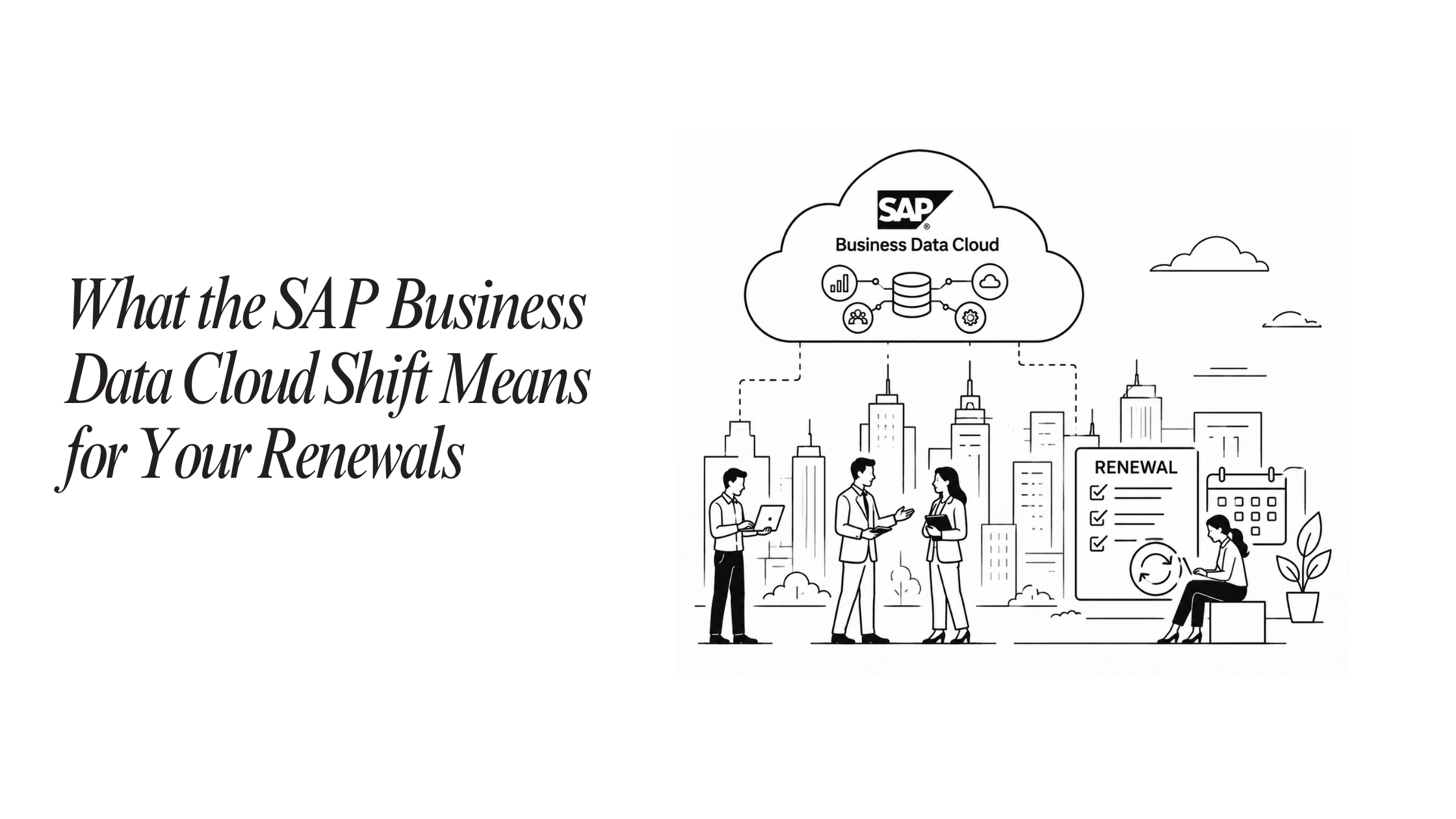
SAP Business Data Cloud is the counter-argument. Its central idea – a business data fabric – is not “one more place to put data.” It’s the opposite. It’s a semantic layer that keeps SAP data usable by AI without moving it out of context.
What “business data fabric” means when you strip the marketing
A data fabric is different from a data lake or a data warehouse in one specific way: the meaning of the data travels with the data.
In a traditional lake, a table called KNA1 shows up as columns of raw values. Somebody who used to work in SAP might remember that KNA1 is the customer master, that KTOKD is the account group, and that certain country codes mean specific things in specific accounting contexts. Everyone else is guessing.
In a business data fabric, KNA1 isn’t a table. It’s a “Customer” data product, semantically defined, with the business rules and relationships preserved. When you query it – or when an AI agent queries it – the fabric knows what a customer is, what account groups mean, and how it relates to sales orders, contracts, credit limits, and payment history.
This is the change that makes AI agents work reliably. Agents traverse the semantic layer. They don’t traverse tables. If the semantic layer is missing – as it is in most data lake implementations – the agent works from what it can infer, and inference is where hallucinations come from.
Why BTP is the enabling piece
The fabric doesn’t live in isolation. It’s part of the broader SAP Business Technology Platform architecture – BDC for the data layer, BTP for the applications and agents that consume it. Enterprises evaluating the Top SAP BTP Partners in US for AI foundation work are increasingly asking about BDC-BTP integration patterns: how do custom BTP applications register with BDC data products, how are semantic definitions extended for enterprise-specific concepts, and how does the BTP identity and authorization framework carry into fabric access controls?
These aren’t hypothetical questions. Enterprises are answering them now, on real projects. The partners who have worked through the answers on early adopter engagements have a meaningful head start over those still figuring it out on customer time.
The 2026 data product landscape
The BDC data product catalog has been expanding fast. New products announced through 2025 and early 2026 span SAP Cloud ERP, SuccessFactors, sustainability, and customer experience solutions. Data product studio, a new BDC capability, lets customers create their own reusable data products – modeled through visual tools or SQL, with governance and lineage tracked in the fabric.
Bi-directional data sharing between BDC and SAP HANA Cloud was announced in late 2025. SAP BDC Connect for Snowflake targets H1 2026 general availability. Microsoft Fabric Connect is planned for Q3 2026. Amazon Athena connectivity was announced at Sapphire 2026. What all of this adds up to: SAP data products can be consumed by non-SAP platforms without replication, and non-SAP data can be brought into the fabric without losing its context.
That’s what “zero copy” means in practice, and it’s why the architecture is a real departure from the ETL-heavy world it’s replacing.
The mid-market picture
BDC’s business data fabric is primarily an S/4HANA-and-above story right now. For enterprises running SAP Business One in the mid-market segment, the immediate applicability is limited – but not zero. Companies working with the Top SAP B1 partners in US on their data strategy should be aware that BDC connectors and Business One data products are on SAP’s forward roadmap, and that architectural decisions made today for B1-adjacent analytics platforms should assume BDC will be part of the picture within 24 months. Building around Snowflake or Fabric today is fine. Building around a proprietary ETL pattern that can’t participate in a fabric later is not.
What to do next
Start with a data product inventory. What SAP data actually matters for the AI use cases you’re funding? What semantic definitions do those use cases require? Which data products does BDC already ship, and which will you need to build in data product studio? That inventory is the difference between a BDC subscription that pays back in year one and one that sits unused.
Where MSITEK fits
Our BTP and data practices work together on BDC foundation programs. We build the data product inventory, design the fabric architecture, and stand up the BTP integration patterns that let your AI agents work against semantically rich data instead of raw table extracts. If you’re evaluating BDC readiness in the context of a broader S/4HANA or Joule rollout, we can start with a two-week discovery that maps your data products to your AI use cases and gives you a defensible sequencing plan.
Leave a Reply